


I met Irene entirely by chance, the way you often meet people who later turn out to matter. My husband and I had decided we needed new connections, so we signed up for a business training — and at one of the master classes we saw a woman on stage talking about how to run a business in America so vividly and so beautifully that the whole room hung on her every word. For a long time after that we didn’t talk, and then, almost on their own, our messages on Instagram began — and we became friends.
There are women who spend their whole lives building one thing, and there is real beauty in that. But there are also women who at some point find the courage to say honestly: here I have done everything I could, and this road leads no further — and then open a new book, not out of exhaustion or fear, but out of a clear and calm understanding of themselves.
In 2012, Irene Dorogova co-founded Dorogov’s Animation Institute in partnership. Over the years it has grown into a full educational system that brings together about three hundred students every year. Its graduates include artists and animators who now work at Disney, Pixar and DreamWorks. Irene continues to lead the school’s education programs while building a new business in America that brings together her art training, design thinking and years of management experience. It might seem like a finished success story, a place to pause and rest — but in America Irene ran into something every one of us meets sooner or later: what is valued without question at home has to be explained all over again in a new country, and sometimes it simply cannot be explained at all.
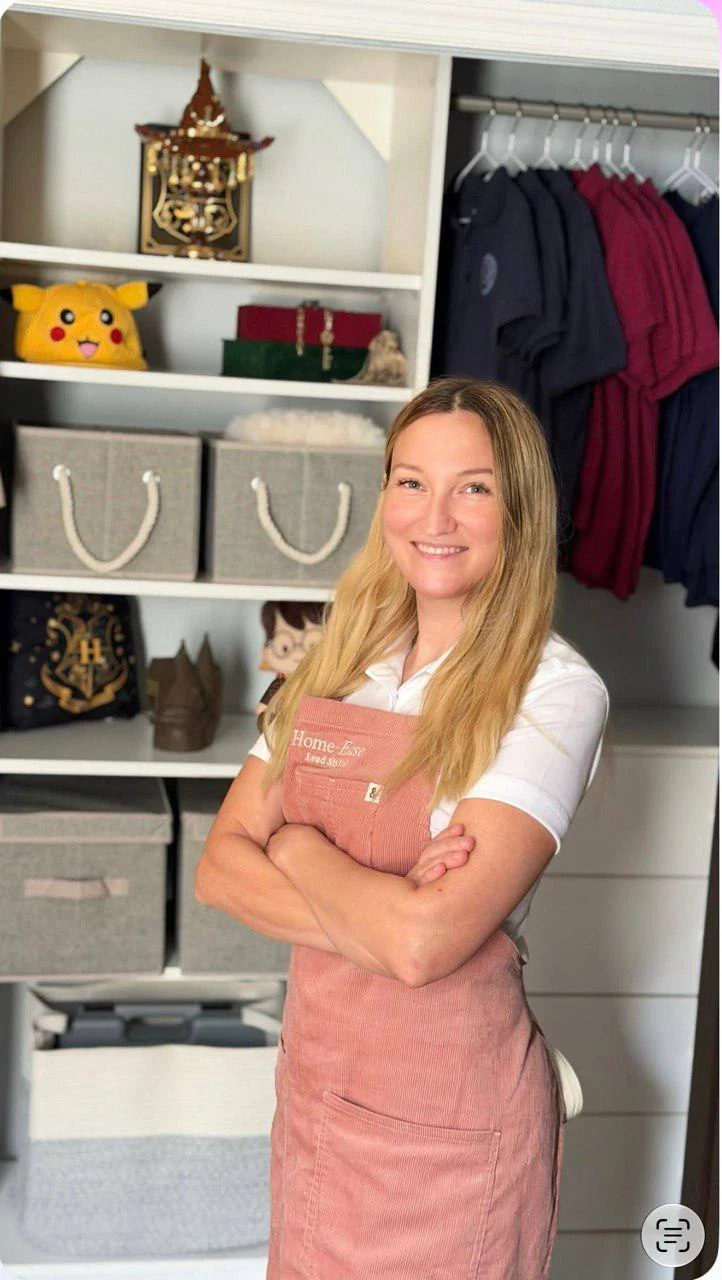
And she did not sell herself short. She took her greatest gift — the ability to see and compose a frame, which she had been learning her entire life — and carried it somewhere no one expected it: into other people’s homes and walk-in closets. That is how her second business was born in Orlando, a home organization, design and cleaning studio that is only a few months old, and clients are already writing to thank her.
I have long said that a woman is bigger than any of her roles — bigger than the role of “the one who has already made it,” and bigger than the role of the immigrant for whom it is supposedly too late to start over. Irene’s story is exactly about this: about not clinging to a single role, even one that brought you recognition, and about not being afraid of the next one.
From here, she tells it herself — in her own words.
Founder, Clirium’s Magazine
Chapter 01
Two Businesses, One Character
If you ask me who I am today, I’m an entrepreneur with two very different and yet surprisingly close businesses: the first is an online school of animation and drawing, and the second is home organization and design, styling and cleaning for the people of Orlando, where I have lived for ten years now.
My path as an entrepreneur began in 2012, when I co-founded Dorogov’s Animation Institute in partnership. Today I continue as co-owner and director, responsible for the education programs, the organization of the teaching process, team development and the school’s internal systems.
This year the school turned fifteen, and over those years we have raised so many artists and animators that I can no longer name them all — many of them now work at Disney, Pixar and DreamWorks. Around three hundred people study with us every year, and from the very first day I tell them honestly that only a few will make it to the end: work in animation is hard, it demands patience and love, and those who do make it, make it for real.
I was born in Siberia. At twenty I moved to Moscow, then spent about a year in Kyrgyzstan, where I went for a project, and all my life I have worked with people of many different nationalities — first with artists, and now with clients who invite me into their homes.
I started my second business only recently, just a few months ago, and I am already receiving very warm feedback: people write that I have a good eye and that life has become easier for them. That is exactly where I want to be useful — to leave a little of myself in someone else’s home, a little of my taste and my sense of order, so that living there feels lighter and more joyful.
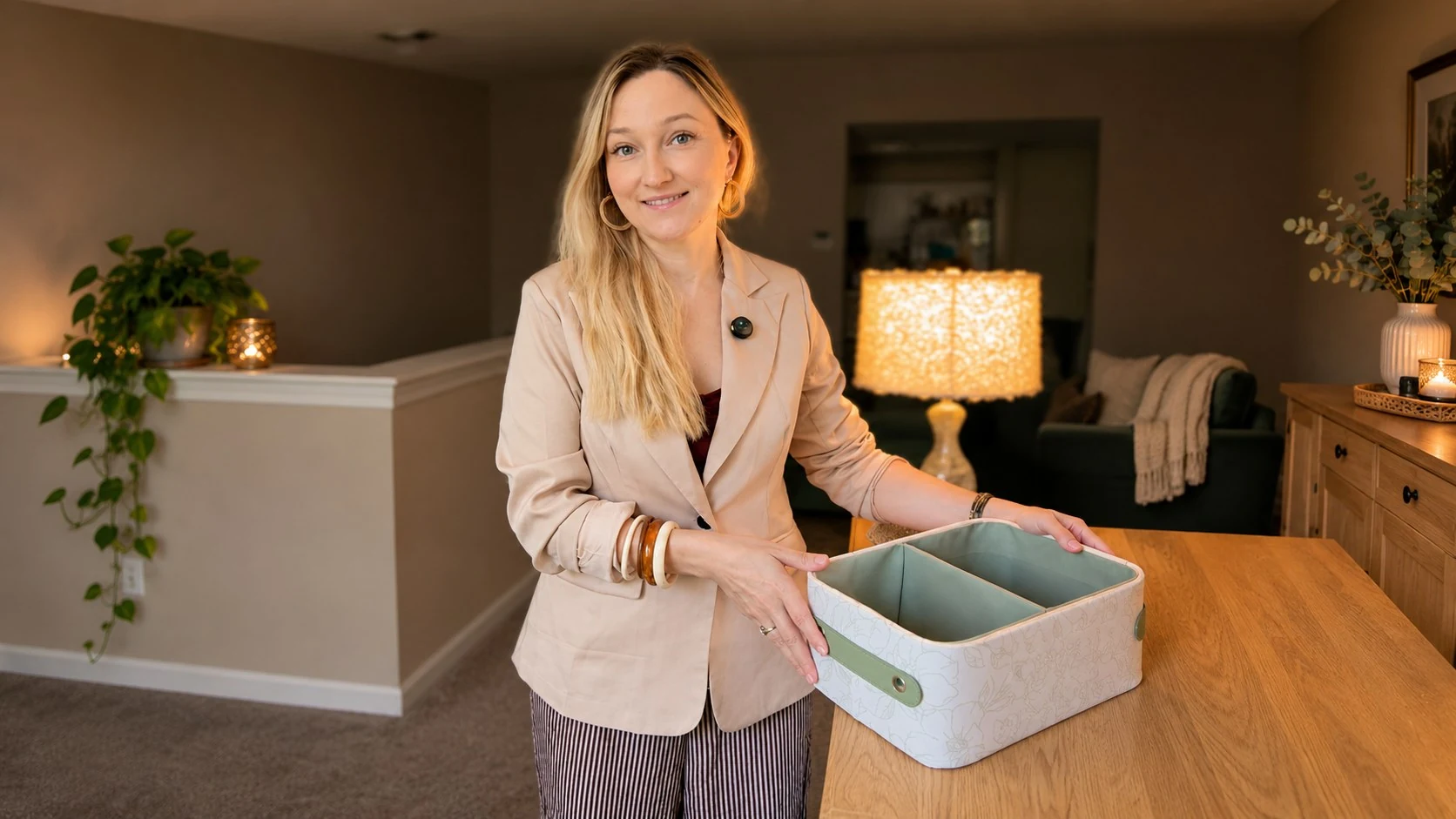
Most of my clients are entrepreneurs or women in executive roles, and I very much want them, when they come home after a long day, not to think about where their clothes are or how they are folded, but to make the same quick, easy decisions at home that they make at work.
A closet is not a storage room. It is a place where you know exactly what is where, take what you need in a moment and walk out feeling that this is your royal space.
— key points

Such a space holds both beauty and self-respect, and every item has its place not because it looks nice in a photo, but because that is how she can use it most easily every single day.
Chapter 02
Where It All Began
We opened the first business back in Russia in partnership with an animation artist who before that had worked at Disney for fifteen years, and only later did the school move online — and it has remained Russian-speaking, and I will explain why a little later.
I came to animation and illustration through my education: I studied industrial design and received an art education, and it was that foundation that opened the door to film for me.
The second business, HomeEase, I built completely differently — for an American audience from day one, because I see how hard it is here for women who work and at the same time run a big household on top of it all. Homes in Florida are huge, five to seven rooms, and keeping up with them after a working day can be simply unbearable.
Over ten years in America I watched closely and tried to understand how we differ — what people prioritize and what is secondary, what touches them and what pushes them away — and now that has become the foundation of my work. Even when my clients are not American but Brazilian, Latin American, Korean or Chinese, I take into account from the first minutes who is in front of me: one woman looks at one thing, another at something entirely different, and words that move one will leave the other indifferent.
People often tell me I am a passionate person, and that is probably my main advantage: if you can warm up a reserved, cool client, you will certainly find common ground with a warm one, which is why I can talk with almost anyone and understand exactly how I can help them.
I started with two things that I believe no woman can do without: money I had saved in advance for the launch, and friends for whom I did my service so that they would tell me honestly, with no discount for friendship, what worked and what didn’t.
Chapter 03
Closing One Door — and Opening a New Book
For a long time I searched for a way to bring my school to an English-speaking audience. I tried, reworked, doubted — and in the end I understood that I could not do it, and that it had nothing to do with strength or desire, but with the fact that we and Americans have completely different attitudes toward the classics.
For us, the foundation — a classical education, knowledge of classical art — is built into our very mentality: we care about it, we demand it of ourselves and of our children. In English-speaking and Spanish-speaking culture this simply isn’t there, and people sincerely don’t understand why they should spend years on fundamentals when they could start making cartoons right away — which means that selling them this kind of training is very, very hard.
I did find a way in the end, but it would have meant cutting the price drastically. Over the years I have learned to value my professional experience, and I understand how much knowledge, time and work stand behind a quality result. That is why it matters to me to create products and services whose value is clear to the client. I never had the goal of holding on to a business at any cost, so I calmly drew a conclusion: fine, this is how the story goes with this venture, which means I need to open something else — something that will bring income and bring me joy at the same time.
And here my long years in the film industry helped me: one day I suddenly realized that I know how to create an image like one from a movie not only on screen, but right inside a person’s home. That is how home organization and styling came about, and for me it was like opening a new book with so many unread pages.
I closed the door on an English-speaking audience for my school — and opened a completely new book and new opportunities for myself.
— key points
Chapter 04
The First Win
When the first clients came to me in the new business, I saw genuine surprise in their eyes: they were struck by my education, by how quickly I find a solution, and by how easily I sense what this particular person needs for the space to become comfortable not in general, but for them.
It was at that moment that I realized I was on exactly the right path, and that feeling was especially precious, because for three whole years I had been feeling my way toward a field that would truly fit me, that I would love and that would resonate inside — and I had finally found it.
And most importantly, people love it: they are delighted with what I give them, and for me that is my first real win.
HomeEase is only a few months old, and it already has nine Google reviews with a 5.0 average. One client writes that she can finally see everything she owns and is “rediscovering clothes and accessories I forgot I even had”; another calls professional organization “one of the best investments you can make in your home.”
Chapter 05
Two Mistakes That Taught Me the Most
My first mistake was believing that only I could handle things and no one else. In my first business I held on to that idea for a long time and for about two years carried absolutely everything myself, from administration to teaching, telling myself that I know my business better than anyone. And that is true — but there is no growth without delegation, and it took me two years of energy and nerves to understand that.
When I finally accepted it, I began teaching my team — what to do and what not to do — and since then I keep them in the loop instead of doing everything myself. In my second business I almost made the same mistake again, but I caught it in time.
My second mistake was about advertising: I thought that if you have one way of attracting clients and it works, there is nothing more to think about. But the world changes every year, something new keeps appearing, and if you get stuck in one channel — only Instagram or only Google — you may never meet the client who is waiting for you somewhere else entirely.
Now I advertise in many different ways, watch the analytics closely and am in no hurry to cross off platforms that didn’t work, because what stayed silent this year may well take off the next. Being flexible, trying new things and learning from every new platform is probably the most important lesson I took from my mistakes.
Chapter 06
The Risk I Learned to Live With
When you work online there is always risk, but the biggest one for me turned out to be international payments: the school serves a Russian-speaking audience, I live in America, and when restrictions appeared between the countries, simply getting paid for my work became a real puzzle.
Three years ago I was seriously at risk of closing the school altogether and losing clients who might not want to pay in new, unfamiliar ways. But I adapted, found every possible way out of the situation — and nothing terrible happened: the school is alive and working.
There will always be risks, there is no avoiding them; over the years I have simply learned to take them much more lightly.
Chapter 07
What Stands Behind the Result
I won’t say that persistence is always good: it is needed where it is truly needed, and pushing ahead just because you’re stubborn is a mistake. Behind every result I’ve achieved there is discipline — doing what needs to be done regardless of COVID, a divorce, and all the ups and downs — and faith in myself, a quiet certainty that I am on the right path.
Many people now say that artificial intelligence will do everything for you — nothing of the kind. AI is only a tool, and if you don’t know the fundamentals of cinematography, animation and drawing, it will be very hard to guide it so that the result is skillful and truly alive.
When I am commissioned to make an animated film, I make it with a knowledge of cinematography and dramaturgy and control every frame. From the outside it all looks light and easy, but behind it is an enormous amount of work, and professionals see it — that is exactly why they decide they can trust me and my studio with their projects and their budgets.
I keep learning, reading books by the veterans of our industry and gathering experience bit by bit, understanding what works and what doesn’t. Yes, today everyone has a short attention span, but I combine the modern with the classical foundations of animation and editing so that a video takes off and delights the client.
The price of a result is respect for your own work: you honor the laws of your craft, and that is why you can sometimes break them — because you know exactly what the result will be.
— key points
And professionalism also means not being afraid to experiment: even if you don’t like a project, you don’t abandon it, you look for ways to make it better.
Chapter 08
I Want More Than Anyone
There is a part of my story without which it wouldn’t quite be mine: I got into film because I wanted more than anyone, and it seems I still do. Whatever I am doing — running, stepping onto the mat at jiu-jitsu practice or working on a frame — that drive lives in me, and I stopped being shy about it long ago.
More than anything I want to pass it on to the people who work alongside me, and I think I am succeeding. My greatest pride is a team member who has worked with me for several years and recently bought a BMW, the car of her dreams: she caught the same thing I live by — that you must never give up, you simply have to look for ways.
She is happy working with me, and I truly believe I have made this world a little better, if only because I have created jobs where people become happier.
Chapter 09
Where I Am Now and Where I’m Going
The animation school — both 2D and 3D — continues to serve a Russian-speaking audience, and students come to us precisely because they understand that the fundamentals must be learned, whatever people say about artificial intelligence today.
In the second business I have one team for now, and to go further I need three or four, because for me this is not just a business but a whole philosophy: a philosophy of the things a home truly needs, a philosophy of comfort, a philosophy of a space made precisely for the person who lives in it.
My next goal is a subscription for maintaining order and design, so that people gradually learn and, in the end, keep this culture and this taste in their homes on their own, without me.
Chapter 10
To the Woman Who Thinks It’s Too Late
I would tell her simply: there is nothing to be afraid of — not the country, not age, not circumstances. You just need to do the work you are good at, and do it honestly.
The language will come, because you will adapt, and if you can afford to invest, you can hire an assistant to speak for you while you learn. Language is not an obstacle at all; on the contrary, it is a chance to understand another culture and truly immerse yourself in it.
Those who stay within the borders of one language — for lack of time, out of fear or simple laziness — miss an entire world: other people and other ideas, other books and other films, another layer of relationships, experiences, emotional highs and lows.
Be confident in your choice and walk the road you chose yourself: take a lantern with you and simply light your own way.
— key points
Chapter 11
Let Yourself Delight in Little Things
My rules for life are very simple.
1. Don’t be afraid to experiment, and live openly. Remember that inside you are the same child who delights in little things — and joy doesn’t require spending money.
2. Be free, and pay no attention to the opinions of people who don’t wish you well.
3. Discipline creates a system. And a system brings results and an understanding of where to go next.
4. Talent on its own is nothing without a mentor and without a philosophy.
5. There is no growth without delegation.
Chapter 12
Irene by the Numbers
15 years — of Dorogov’s Animation Institute, where Irene is co-owner and director.
about 300 students a year.
10 years — in Orlando.
3 years — searching for a new venture.
1 team now, 3–4 — the goal for the new business.
Figures as reported by the featured guest. This is personal experience, not a promise of results.
Chapter 13
Commentary by the Founder
What moved me most in Irene’s story is one thought — “it matters to me to create products and services whose value is clear to the client” — and there is no pride in it, only a mature, calm knowledge of her own worth: when the market isn’t ready to pay for what you can do, there is a temptation to make yourself smaller, but Irene chose differently and found a new form for the very same gift.
And the gift never went anywhere: an artist who has spent her whole life composing frames simply walked into someone else’s home and saw a frame there. That is often how it happens — a new venture isn’t invented from scratch, it is recognized within yourself.
What also matters deeply to me is how Irene speaks about the women she works for: a closet as a royal space is not about shelves at all, it is about self-respect in the small things with which each of our days begins.
Irene, thank you for your honesty and for the lantern you pass on to others.
in brief
Irene’s Rules of Life
About the heroine
Irene Dorogova is an animation artist and entrepreneur based in Orlando, Florida. She is co-owner and director of the online school Dorogov’s Animation Institute, founded more than 15 years ago, where she leads the programs, enrollment and the entire teaching process. She is the founder of HomeEase Orlando, a home organization, design and cleaning studio. Trained as an artist and industrial designer, she works in the film industry.
This story was prepared from the featured guest’s answers: the introduction and commentary are by Victory Naydenova, and the story is told in the guest’s own first-person voice. The experience described is personal and is not a promise of results.
- Role
- Animation artist, entrepreneur
- Based in
- Orlando, Florida, USA
- School website
- dorogov-mentor.orgdorogov-mentor.com
- HomeEase Orlando
- homeeaseorlando.com
- @homeeaseorlando
- Irina Dorogova
- Telegram
- @irene_dorogova_art
Links are provided as reference information about the heroine. This is not advertising: the editors receive no compensation for publication.
FAQ
01Who is Irene Dorogova?
An animation artist and entrepreneur based in Orlando: co-owner and director of Dorogov’s Animation Institute and founder of HomeEase Orlando, a home organization, design and cleaning studio.
02Where do graduates of Dorogov’s Animation Institute work?
According to Irene, the school’s graduates include artists and animators who now work at Disney, Pixar and DreamWorks.
03Why did Irene start a second business in America?
Winning an English-speaking audience for the school would have meant cutting the price drastically. Irene chose to open a new venture that draws on her art training, design thinking and management experience.
04What are Irene Dorogova’s rules of life?
Don’t be afraid to experiment, stay free of unkind opinions, build a system through discipline, find a mentor, and delegate.
Published with the heroine’s consent: the interview was given voluntarily, and the text and photographs were approved by her before publication. Heroine consents


Comments
0No comments yet. Be the first — share what resonated with you.
your thoughts